
How to Start a Daily Devotional in 10 Minutes a Day

To start a daily devotional, pick one fixed time each day, read a short Bible passage slowly, write a sentence about what stood out, and close with a short prayer. Ten minutes is enough. Showing up most days matters far more than how long each session lasts.
A devotional (some people call it a quiet time) is simply a regular slot you set aside to read Scripture and talk to God. The six steps below turn that into a routine that fits around a full timetable and a phone that never stops buzzing.
Step 1: Pick a time for your daily devotional
The most reliable habit is one attached to something you already do. Reading before you open Instagram at 7:30am works for a lot of people. So does the 20-minute bus ride home, or the ten minutes after dinner before you start homework. Choose one slot and one place and keep them the same for the first two weeks. Habits form faster when the cue never changes, so the same chair and the same time do a lot of the work for you.
Be honest about your real schedule. If you hit snooze three times every morning, a 6am devotional is a plan to fail. A slot you already have free, even a short one, beats an ideal slot you never reach.
Mornings have a long history here. Jesus himself found quiet time before the day got busy:
“Early in the morning, while it was still dark, he rose up and went out, and departed into a deserted place, and prayed there.”
Mark 1:35 (WEB)
Step 2: Choose what to read for your devotional
Beginners often pick something too big, like reading Genesis to Revelation in a year, and quit by March. Start small. A single psalm or half a chapter of Mark is plenty for one sitting. Mark is the shortest Gospel and moves fast, which makes it a friendly place to begin. The Psalms suit mornings when you need words for how you feel before you have your own.
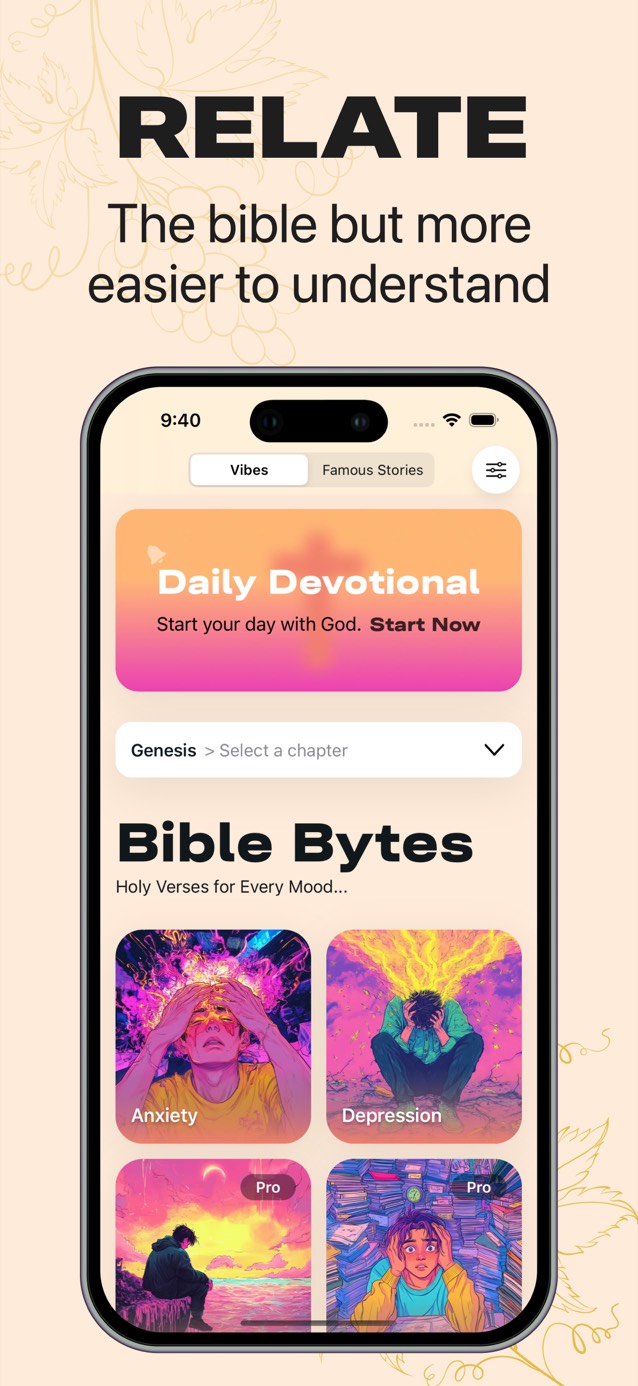
A ready-made reading removes the decision entirely. The home screen of the Gen Z Bible app has a Daily Devotional card labelled "Start your day with God", so the passage is waiting when you open it. If you want to go further on your own, our guide on how to start reading the Bible suggests which books to open first.
Step 3: Read slowly during your quiet time
Read the passage through once at normal speed to get the flow. Then read it again, slower, and notice which phrase makes you pause. That pause is usually where the devotional happens. You don't need to understand every line. If a verse confuses you, note it and move on, because the phrase that sticks matters more than a perfect grasp of the whole passage.
Put your phone on Do Not Disturb for the ten minutes if you're reading on it. A single group chat notification can pull you out of a psalm faster than you'd expect.
Step 4: Write one line in a devotional journal
Writing even one sentence helps you remember what you read by lunchtime. Keep it simple: what does this passage say, and where does it touch my day? "God doesn't get tired of me, and I'm exhausted before this 9am exam" counts.
If you want more structure, the SOAP Bible study method breaks this into four parts: Scripture, Observation, Application and Prayer. The Gen Z Bible app has SOAP notes built in, and you can save your favourite verses to come back to later.
Step 5: Pray about what you read
Take your one line and turn it into a prayer. It can be two sentences long. Thank God for what you noticed and ask for help with the part of your day it touched. Plain words are fine. God is used to hearing from people at every level of eloquence. Some days your prayer will be one honest sentence about feeling tired or anxious, and that still counts. Praying out loud in a quiet room, or typing it into your notes app, can help if your mind tends to wander.
David described his own morning prayers this way:
“Yahweh, in the morning you shall hear my voice. In the morning I will lay my requests before you, and will watch expectantly.”
Psalm 5:3 (WEB)
Step 6: Keep your devotional routine going after a missed day
You will miss days. Exam weeks and late shifts happen to everyone. When it happens, skip the guilt and skip the catch-up marathon. Pick up with today's reading as if nothing happened.
A daily reminder helps more than willpower. Set one in the Gen Z Bible app for the time you chose in step 1, and let it do the remembering for you. If a hard stretch makes reading feel impossible, the Anxiety and Stressed mood cards take you straight to verses for that feeling, and our list of Bible verses for stress and school is a good fallback.
“It is because of Yahweh’s loving kindnesses that we are not consumed, because his compassion doesn’t fail. They are new every morning. Great is your faithfulness.”
Lamentations 3:22-23 (WEB)
Questions people ask
How long should a daily devotional take?
Ten to fifteen minutes is a good target when you're starting out. That covers a short reading, one written line and a brief prayer. Once the habit sticks, you can stretch it to 20 or 30 minutes if you want to.
Is it better to do a devotional in the morning or at night?
Either works. Morning devotionals set the tone for the day, and evening ones give you room to reflect on what happened. The best time is the one you can protect most days of the week.
Scripture quotations are from the World English Bible (WEB), which is in the public domain.