
How to Start Reading the Bible as a Beginner

The easiest way to start reading the Bible as a beginner is to open one of the Gospels (Mark or John), read one chapter a day at the same time each day, and write down one thing that stood out. Ten minutes is enough. Starting at Genesis and pushing straight through usually stalls somewhere in Leviticus.
The Bible is 66 books written over many centuries, so it helps to have a plan before you open it. This guide covers where to begin, how the books fit together, a daily rhythm that works around school or work, and what to do on the days a passage goes over your head.
Where beginners should start reading the Bible
Start with the life of Jesus. The four Gospels (Matthew, Mark, Luke and John) sit at the heart of the Christian faith, and the rest of the Bible makes more sense once you know them. Mark is the shortest and moves fast, with 16 chapters you can finish in just over two weeks. John is slower and more reflective, and many people read it second.
After a Gospel, a good next order looks like this:
- Acts: what happened after Jesus rose, and how the first churches began
- Genesis 1 to 25: creation and the story of Abraham
- Psalms: one psalm a day alongside your main reading, for honest prayers about every mood
- Philippians or James: short letters with practical advice for everyday life
How the Bible fits together
It helps to picture the Bible as a library. The Old Testament's 39 books were written before Jesus: history, law, poetry, wisdom and the prophets. The New Testament's 27 books were written after, starting with the four Gospels, then Acts, then letters to early churches, and finally Revelation.
Knowing the type of book changes how you read it. A psalm is a song or prayer, so you read it slowly and feel it. A letter like Romans builds an argument, so you follow it paragraph by paragraph. Proverbs are short sayings you can think about for a whole day.
“Every Scripture is God-breathed and profitable for teaching, for reproof, for correction, and for instruction in righteousness, that the man of God may be complete, thoroughly equipped for every good work.”
2 Timothy 3:16-17 (WEB)
How much Bible reading to do each day
One chapter a day is a strong start. That takes most people five to ten minutes, and it adds up to the whole of Mark in 16 days. Tie it to something you already do. Reading right after you brush your teeth, or on the bus before a 9am class, sticks better than "sometime today."
Put your phone on do-not-disturb for those ten minutes if you are reading on it. When your notifications stay quiet, you actually take in what you read. Missing a day is normal. Pick up the next chapter the day after and keep moving.
Tips for understanding the Bible when you're new
Read in a translation you can follow. If older English makes you reread every sentence, try a modern version first. You can always compare it with a more literal one later.
Read with a question in mind: what does this show about God, and what does it show about people? Then write one line in a notebook. Once you are comfortable, the SOAP Bible study method gives that habit more structure with four short steps.
Reading out loud helps more than you might expect, especially with the Psalms. Poetry was written to be spoken, so the rhythm makes more sense when you hear it, and saying the words slows you down enough to notice what they mean.
“Your word is a lamp to my feet, and a light for my path.”
Psalm 119:105 (WEB)
Reading the Bible book by book in Gen Z Bible
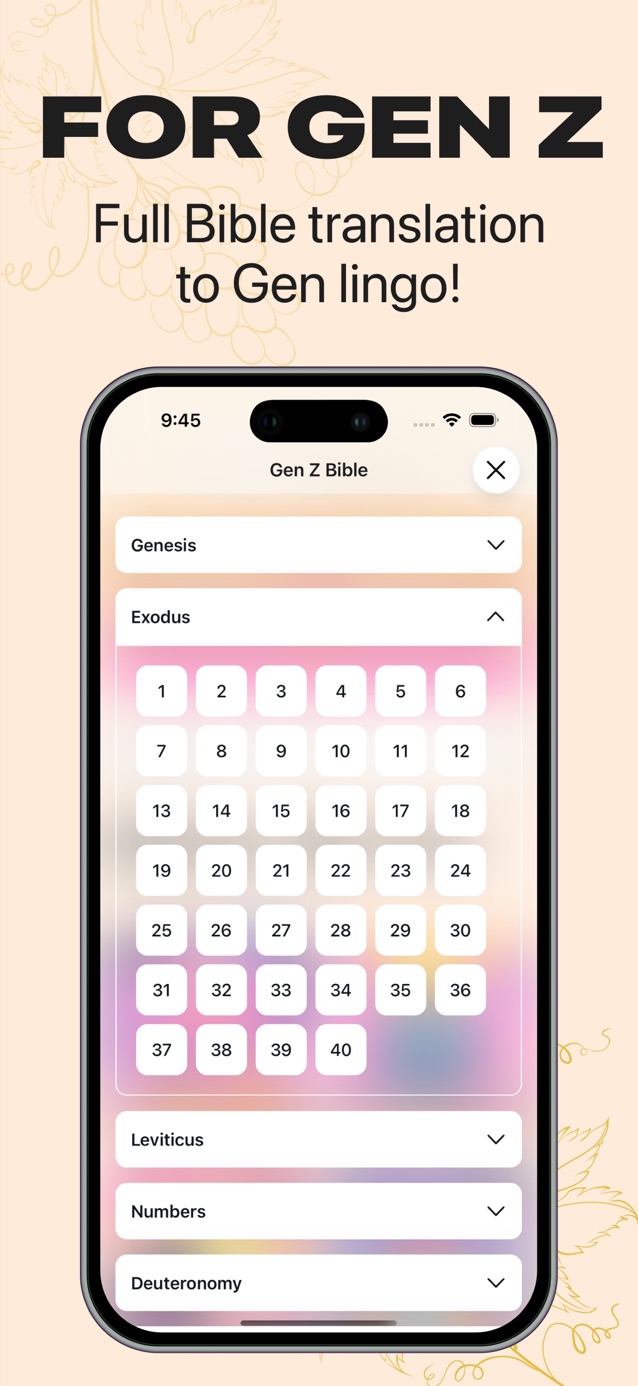
Gen Z Bible includes the full Bible in everyday Gen Z language, so you can read any book straight through. Open the book list, tap a book like Exodus, and pick a chapter from the grid. If you want to check a line against the traditional wording, the See OG Version toggle shows it on a verse. Our page on the Gen Z Bible translation explains how the two versions line up.
You can also set a daily reminder so your reading time pings you, and save favorite verses to come back to.
What to do when a Bible chapter makes no sense
Every reader hits chapters that feel confusing or even upsetting, like the long lists of names in Numbers or the battles in Joshua. That is okay. Write your question down and continue with the next reading tomorrow. If you have a study Bible, the notes at the bottom of the page often clear things up.
Asking someone helps too. A youth leader or a friend who has read the Bible for a while can often explain the background in two minutes. Plenty of questions get answered later as you read more of the story.
Questions people ask
Should I read the Bible from Genesis to Revelation in order?
You can, but most beginners do better starting with a Gospel like Mark or John. Once you know the story of Jesus, going back to Genesis and reading forward makes a lot more sense.
What should I do if I miss a day of Bible reading?
Just read the next chapter the following day. There is no need to catch up on missed chapters. A steady habit over months matters far more than a perfect week.
Scripture quotations are from the World English Bible (WEB), which is in the public domain.