
The SOAP Bible Study Method, Step by Step

The SOAP Bible study method is a four-step way to study one short passage: write out the Scripture, note your Observations about what it says, work out an Application for your own life, and finish with a Prayer. It takes about 15 minutes and needs only a Bible and somewhere to write.
People like it because it turns reading into something you can actually hold onto. Instead of skimming a chapter and forgetting it by lunch, you slow down on two or three verses and leave with one clear thought for the day. Below is each step, a full example using James 1:5, and a few ways to keep it going past the first week.
Before you start: choose a passage for SOAP study
SOAP works best on a small piece of text. One to five verses is plenty. If you pick a whole chapter, the Observation step turns into a book report and you run out of steam before Prayer.
Most people either follow a book in order (a few verses a day through Philippians, say) or pick a verse that meets them where they are. Some good places to begin:
- James 1: short and practical, with a new idea almost every verse
- Psalm 23 or Psalm 139: honest prayers you can borrow
- Philippians 4: worry and peace in 23 verses
- Mark 1: fast-moving stories about what Jesus did
S is for Scripture: write the verse out
Copy the passage word for word and put the reference at the top. It feels slow, and that is the point. Writing makes you notice small words like but and therefore, which your eyes skip when you read on a phone screen at 11pm.
Handwriting in a notebook is great, though typing into your notes app counts too. Use a translation you understand. If older wording trips you up, a plainer version helps (our guide to the Gen Z Bible translation explains how that works).
O is for Observation: what does the passage say?
This step is about the text itself, before you get to what it means for you. Ask plain questions and write short answers. Who wrote this, and who were they writing to? Which words repeat? Is there a promise attached, or a command?
Two or three bullet points are enough. If a verse confuses you, write the question down. "Why does James say ask God instead of just try harder?" is a perfectly good observation.
A is for Application: using SOAP in real life
Application is where the study lands in your actual week. Keep it specific. "Trust God more" is hard to act on. "Before I text my group chat about the exam tomorrow, I will pray about it for two minutes" is something you can do by Thursday.
A useful test: could a friend check if you did it? If yes, it is specific enough. One application per study is better than five you forget.
P is for Prayer: finish the SOAP study
Close by talking to God about what you just read. The prayer can be three sentences. Thank him for what the verse shows about him. Then be honest about where you struggle and ask for help with the application you wrote.
Writing the prayer down gives you a record to look back on. A month from now you can flip back and see what you asked for and how it went.
A SOAP Bible study example using James 1:5
Here is a complete study on one verse, the kind you could do on the bus to class:
- Scripture: James 1:5, copied out in full.
- Observation: James assumes we will lack wisdom sometimes. God gives "liberally," so he is generous about it, and "without reproach" means he does not make you feel stupid for asking. The verse ends with a promise.
- Application: I have been going back and forth on which summer job to take. Tonight I will write down both options and ask God for wisdom before I decide, instead of polling everyone I know.
- Prayer: "God, thanks for being generous and patient when I don't know what to do. I need wisdom about this job. Help me hear you over the noise, and give me peace about the choice."
“But if any of you lacks wisdom, let him ask of God, who gives to all liberally and without reproach; and it will be given to him.”
James 1:5 (WEB)
How to do the SOAP method in the Gen Z Bible app
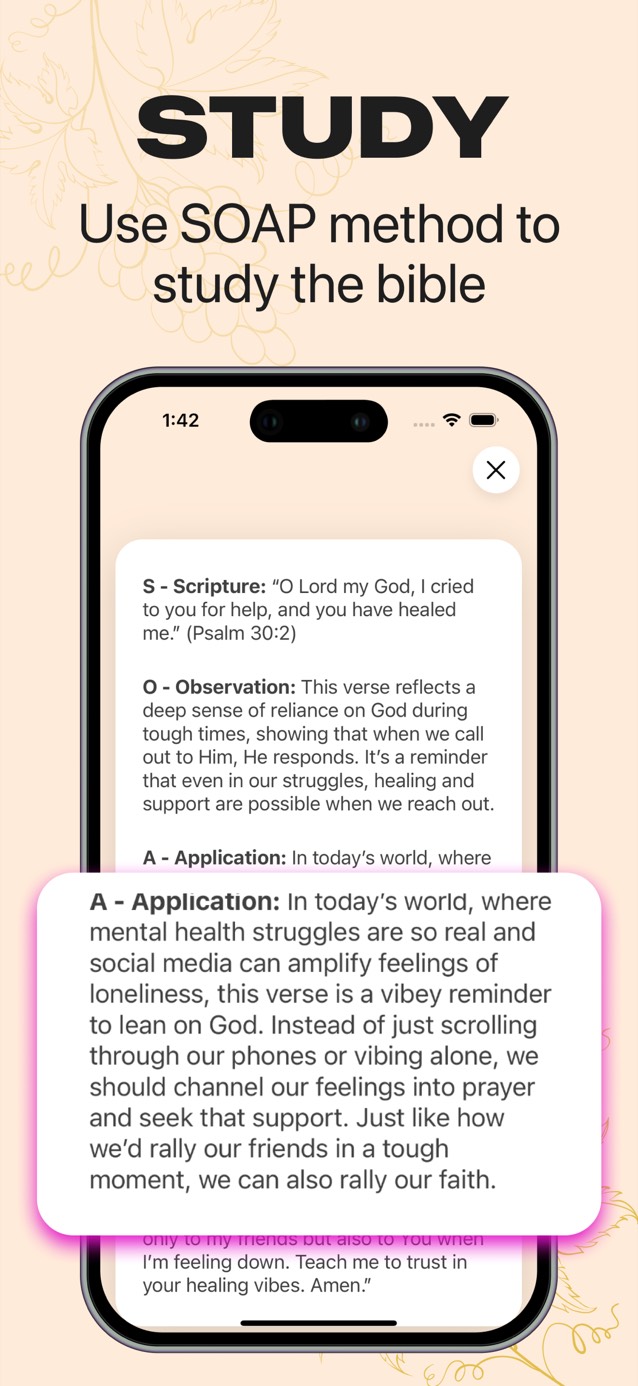
The Gen Z Bible app builds SOAP into its Vibe Check. Open a verse, tap Vibe Check, and you get a SOAP note laid out in the four sections, written in everyday language. Verse screens also have a See OG Version toggle if you want the original wording next to it. You can save the verses you want to come back to and set a reminder so the study happens at the same time each day.
If you want SOAP to become a daily rhythm, pair it with a short morning routine. Our guide on how to start a daily devotional covers picking a time and sticking with it.
Questions people ask
How long should a SOAP Bible study take?
Around 10 to 20 minutes. Keep the passage short (one to five verses) and it fits into a commute or the time before bed. Consistency matters more than length, so a 10-minute study most days beats an hour once a month.
Can I do SOAP without a journal?
Yes. A notes app works fine, and so does the SOAP note inside the Gen Z Bible app. The point is to put each step into your own words somewhere you can find it again later.
Scripture quotations are from the World English Bible (WEB), which is in the public domain.